
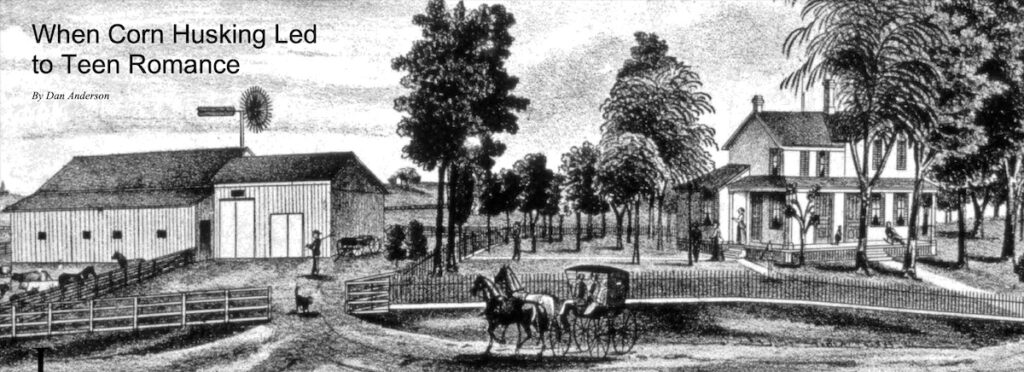
If you can pause for a minute between rushing the kids to soccer games and cheerleader practice, you may enjoy a brief look at how our youngsters expended energy in Glen Ellyn’s early days, when it was basically a small farming community.
The village was called Danby during much of that period (1851 to 1874). The town itself had only a few hundred residents, and many of its businesses served the farmers whose lands surrounded the town. Life was simpler, but probably not slower. There were too many things that needed to be done—and for teenagers, too many fun things begging to be done.
Take corn husking, for example. Sounds pretty tedious. But if you were a young man among a group of teenagers at a Saturday afternoon corn husking bee, and if you happened to come across a red ear of corn, tedium became titillation. The rule was: “he who finds a red ear gets to kiss the girl of his choosing.” According to the recollections of one old timer, red ears were quite rare. But after the first one was discovered, others (or possibly the same ear) seemed to pop up pretty frequently until all the girls had been kissed and it was time to move from the chilly barn to the warm confines of the farmhouse for a glass of cider and gingerbread cookies or pumpkin pie.
Another favorite pastime was ice skating. But it wasn’t on Lake Ellyn in those days, because that lake didn’t exist until 1889 when a creek was dammed to create it. The creek that later fed Lake Ellyn actually ran through the downtown area (it still does, but it’s buried in storm sewer pipes now), through what is now Lake Ellyn, and on to the East Branch of the DuPage River. Youngsters would strap on their skates in downtown Danby and then glide all the way to Lisle and back on the DuPage River.
This, of course, was after they had done their “chores” at home, and sometimes before heading to a barn dance for the evening. Census data from the 1800s didn’t include anything about average height and weight, but it’s a fair guess that teen obesity wasn’t much of an issue in those days.